Osteoarthritis of the Knee and Hip: What Physiotherapy Can (and Can't) Do
A realistic look at what physiotherapy can achieve for osteoarthritis, and how it fits alongside other treatment options.
 Written by John Winters, HCPC-registered physiotherapist (PH114616)
Last reviewed 28 October 2026
What Osteoarthritis Actually Is
Osteoarthritis is a common joint condition where the cartilage that cushions the ends of bones gradually wears down over time, most frequently affecting weight-bearing joints like the knee and hip. It's often described to patients as "wear and tear", which captures part of the picture but can be misleading — osteoarthritis isn't purely a mechanical process of a joint simply running out of cushioning, and how much pain someone experiences doesn't always match how a joint looks on an X-ray. Some people with significant changes on imaging have relatively little pain, while others with milder changes are considerably more limited, which is part of why treatment needs to be guided by your actual symptoms and function, not the scan alone.
What Physiotherapy Can Realistically Help With
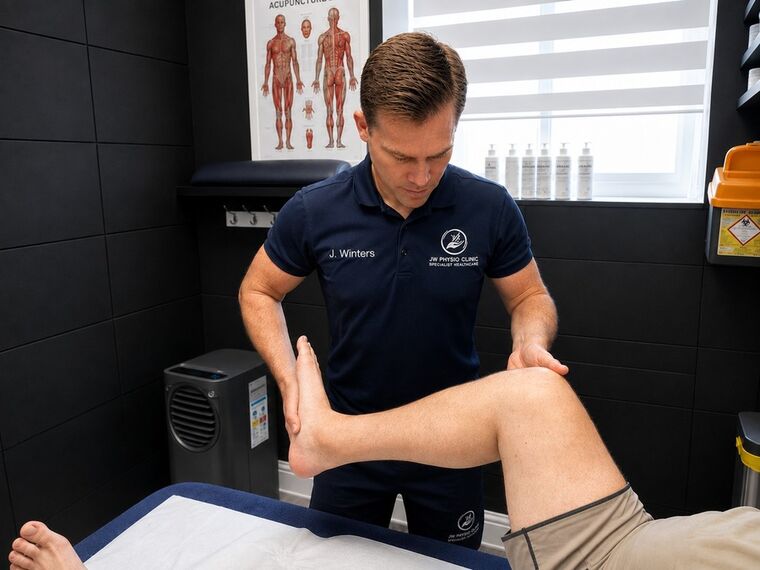
Physiotherapy has a well-established role in managing knee and hip osteoarthritis, and for many people it's genuinely effective at reducing pain and improving function without surgery. The main components are targeted strengthening exercise — particularly for the muscles supporting the affected joint, since stronger surrounding muscles help share the load the joint itself has to bear — alongside manual therapy to manage stiffness and pain, and practical advice on activity modification and pacing. Improving strength and control around an arthritic joint frequently reduces pain and improves how far and how comfortably someone can walk, climb stairs or get up from a chair, even without any change to the underlying joint changes visible on a scan.
Weight management, where relevant, can also meaningfully reduce load through weight-bearing joints, and we're happy to discuss this sensitively as part of an overall management plan where it's likely to help.
What Physiotherapy Can't Do
It's important to be upfront: physiotherapy cannot regenerate cartilage or reverse the structural changes of osteoarthritis. If a joint has progressed to the point where pain is severe, function is significantly limited despite a proper course of physiotherapy, and quality of life is significantly affected, joint replacement surgery may become the most appropriate option, and that's a conversation for an orthopaedic surgeon rather than a physiotherapist. Our role in that situation is to help you stay as strong, mobile and functional as possible in the meantime, and to support your rehabilitation before and after surgery if that's the direction you and your surgeon decide on.
When an Ultrasound-Guided Injection Might Help
For some patients, a flare of joint inflammation makes it hard to engage with the strengthening exercise that ultimately helps most. In these situations, an ultrasound-guided injection — steroid or hyaluronic acid, depending on the joint and presentation — can sometimes calm things down enough to make rehabilitation more comfortable and productive. We can arrange this kind of referral, via our partner clinic, where it looks like it would genuinely help your specific situation.
Building a Realistic Plan
The most useful thing we can offer with osteoarthritis isn't a promise of a cure, but an honest, individualised plan: a clear explanation of what's driving your symptoms, a realistic sense of what physiotherapy is likely to achieve for you specifically, and straightforward advice on managing flares, staying active and knowing when it might be time to discuss further options with a specialist. Many people manage knee and hip osteoarthritis well for years with the right combination of strengthening exercise, activity pacing and occasional flare-up management, without ever needing surgery.
Exercise Is One of the Best-Supported Treatments
For knee and hip osteoarthritis, exercise is consistently recommended in national guidance. It may feel counterintuitive to move a painful joint, but well-chosen strengthening and general activity can reduce pain and improve function for many people. The aim is not to push through severe pain, but to find a level that your joint tolerates and build gradually.
Weight, Footwear and Everyday Habits
Excess body weight increases the load through the knee and hip, and even modest weight loss can reduce symptoms for some people. Supportive footwear, a walking aid when needed and breaking up long periods of sitting or standing can also help. These are practical steps that sit alongside your exercise plan.
Flare-Ups
Osteoarthritis often fluctuates. Flare-ups can follow increased activity, cold weather or no obvious trigger. During a flare, it usually helps to ease back temporarily, keep gently moving and return to your normal programme as the flare settles, rather than stopping everything.
When Surgery Is Being Considered
Joint replacement can be very effective for people with advanced osteoarthritis whose symptoms are not controlled by other measures. Being as strong and mobile as possible before an operation often helps recovery afterwards, and structured rehab after surgery supports the best result. Our guide to physiotherapy after surgery outlines what to expect.
What a Realistic Plan Might Include
- Education about your joint and what is safe to do
- Targeted strengthening and mobility exercise
- Hands-on treatment to ease stiffness and discomfort
- Walking, cycling, swimming or other activity you enjoy
- Advice on pacing, footwear and aids
- Consideration of injection or onward referral if symptoms remain troublesome
Getting Started
If you're living with knee or hip pain and aren't sure whether it's osteoarthritis, or simply want a clear plan for managing symptoms you already know are arthritic, a physiotherapy assessment is a sensible first step. We'll give you an honest picture of what to expect and build a plan around your specific joint, symptoms and goals.
Frequently Asked Questions
Appropriate exercise does not usually damage an arthritic joint and is generally recommended. The key is the right type and amount, increased gradually.
No. It cannot reverse the changes in the joint, but it can help reduce pain, improve movement and strengthen muscles so you function better.
Not always. Osteoarthritis is often diagnosed from your history and examination. We can advise if imaging would change what we do.
If pain remains significant despite exercise and other measures, an injection may be considered as part of a wider plan. We can talk through the options and refer where appropriate.
Talk to the JW Physio Clinic team
Book an appointment at our Loughton clinic. No GP referral is needed, and same-week appointments are usually available.
Book an Appointment Arthritis physiotherapy in LoughtonRelated Reading
- Knee Pain: When to See a Physio and What Helps
- Physiotherapy vs Ultrasound-Guided Injection: Which Do You Need First?
- Prehab: Why Physiotherapy Before Surgery Can Help Your Recovery
This article is general information and is not a substitute for an individual assessment. If you are worried about your symptoms, speak to a healthcare professional.
Manage Your Symptoms
Get an individual assessment and a realistic plan for your knee or hip pain.
Book an Appointment Call 02031 466 837 WhatsApp Us